
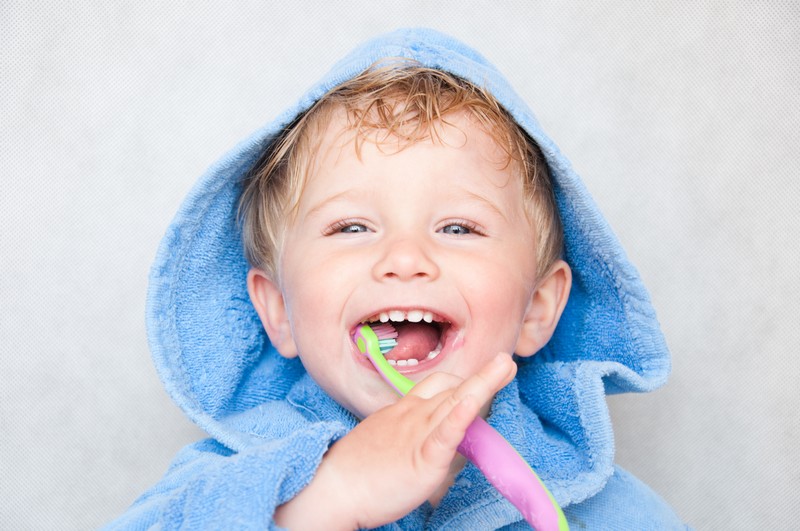
Ensuring your little one’s baby teeth stay healthy is more crucial than many realize. Even though these first teeth fall out eventually, they play important roles in your child’s early development.
Baby teeth support clear speech, help with proper chewing, and keep the right space open for adult teeth to grow in correctly. Losing baby teeth too soon can cause neighboring teeth to shift, which might lead to crowding or crooked adult teeth. This often means longer orthodontic treatments and less-than-perfect smiles.
Tooth decay can start as soon as your baby’s first tooth appears, usually around six months old. That’s why the American Academy of Pediatric Dentistry (AAPD) recommends scheduling a “well-baby checkup” with a pediatric dentist by age one.
Book OnlineWhat is baby bottle tooth decay?
Baby bottle tooth decay, also called early childhood caries, refers to cavities affecting infants and toddlers. While it can appear on any baby teeth, it most often affects the upper front teeth.
If decay becomes severe, your child’s pediatric dentist may need to remove the affected tooth. In such cases, a space maintainer is usually placed to prevent other teeth from shifting and causing alignment problems.
With regular dental visits and a consistent home care routine, baby bottle tooth decay is entirely preventable.
How does baby bottle tooth decay start?
Tooth decay begins when acid-producing bacteria build up in the mouth. These bacteria often pass from parents to babies through saliva — for example, by sharing spoons or cleaning pacifiers with your mouth.
The main culprit, however, is frequent exposure to sugary liquids like breast milk, formula, juice, or sweetened water in bottles.
When babies sip these sugary drinks during naps or bedtime, the sugars stay on the teeth, feeding bacteria that create decay-causing acids. These acids slowly wear down tooth enamel, leading to painful cavities.
Babies lacking enough fluoride are at greater risk. Fluoride helps protect teeth by minimizing mineral loss and encouraging repair. Your pediatric dentist will assess if your child needs fluoride supplements or other protection.
What can I do at home to prevent baby bottle tooth decay?
Stopping baby bottle tooth decay is possible with some simple care steps. Many parents find these tips helpful:
- Avoid sharing saliva—rinse pacifiers and toys in clean water and use separate spoons for everyone.
- Gently clean your baby’s gums with a soft washcloth after feedings.
- Once teeth come in, brush gently with a soft, age-appropriate toothbrush and ADA-approved toothpaste. For children under two, fluoride-free toothpaste is best.
- When your child can spit out toothpaste, switch to a pea-sized amount of fluoridated ADA-approved toothpaste. Too much fluoride can cause fluorosis, so keep it moderate.
- Never put sugary drinks in bottles or sippy cups. Stick to water, breast milk, or formula. Encourage switching to a regular cup by 12 months.
- Don’t dip pacifiers in sweet substances like honey.
- Limit sugary snacks and promote a nutritious diet.
- Avoid letting your child go to bed with anything but water in a bottle.
- Keep brushing your child’s teeth until about age seven, since they might miss spots.
- Ask your pediatric dentist to check your child’s fluoride needs at visits.
If you have questions or want to learn more about preventing baby bottle tooth decay, please reach out to Peak Smiles Pediatric Dentistry at (413) 327-0090 in Lee, MA.
Book Online